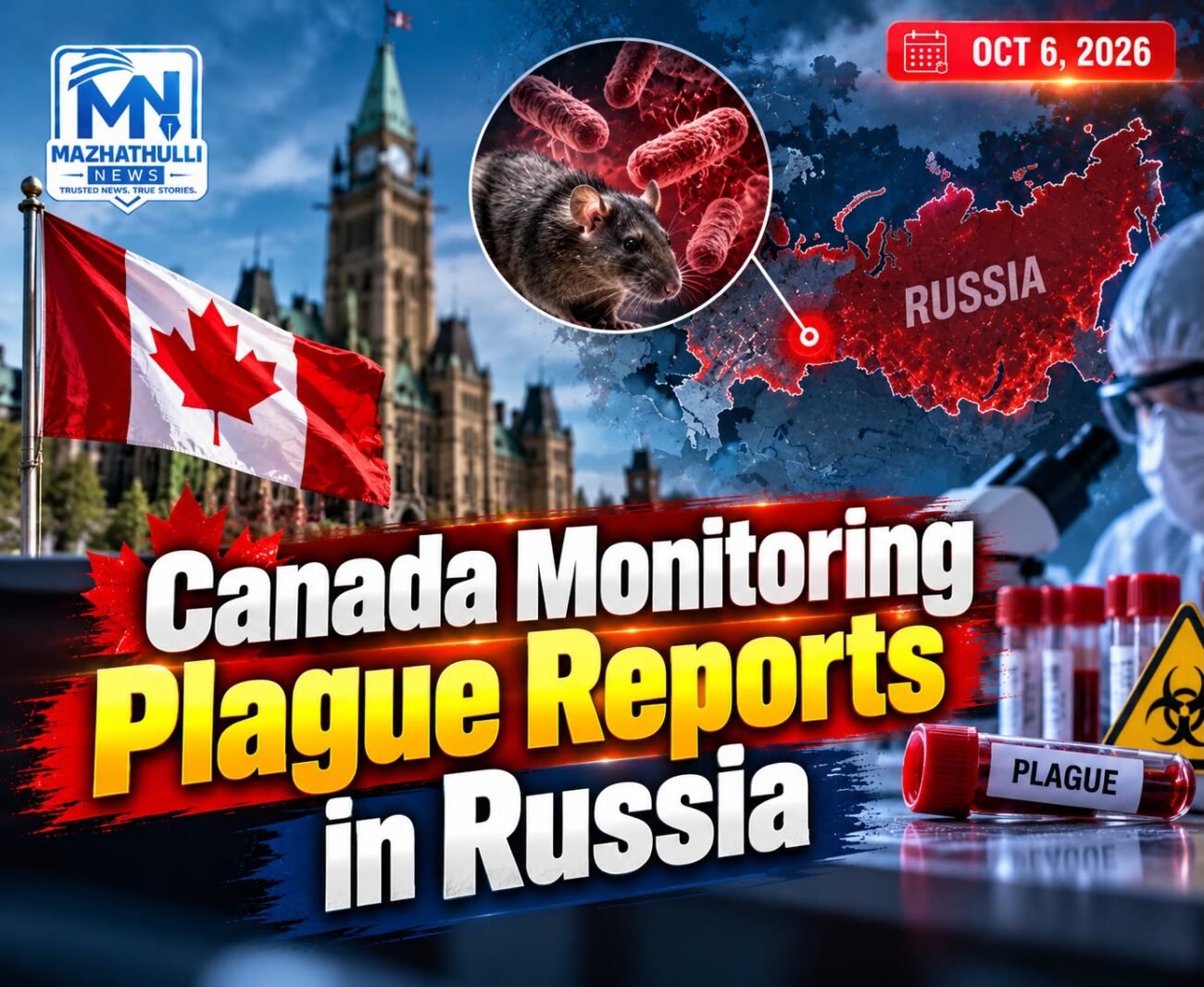
Canada Monitoring Plague Reports in Russia
Canada is closely monitoring reports surrounding the death of a woman who worked at a plague research institute in Siberia, Federal Health Minister Marjorie Michel said Monday. Russian authorities have said the woman died from pneumonia of unknown origin, while reports in local media have raised concerns that she may have contracted pneumonic plague. The woman worked at the Irkutsk Anti-Plague Research Institute of Siberia and the Far East in Russia’s Irkutsk region. She reportedly became ill and was later treated at a hospital in Shelekhov, a town near Irkutsk, where she died last week. The circumstances surrounding her death have attracted international attention because of her work at an institute that specializes in research and surveillance of plague. Unconfirmed reports have suggested a possible connection between her illness and the handling of plague-related pathogens at the facility. Russian health authorities, however, have said they have found no evidence that her illness was caused by any of the pathogens she worked with. Russian authorities have taken precautionary measures following the death. The hospital where the woman was treated has been placed under quarantine, while people who may have come into contact with her are being monitored. Around 200 people have reportedly been placed under medical observation as authorities continue testing and contact tracing.
So far, officials have not confirmed any additional cases of plague among those being monitored. Russian health authorities have also said there is no evidence of a laboratory accident or a wider outbreak linked to the research institute. The concern is mainly focused on pneumonic plague, a severe form of plague that affects the lungs. Unlike other forms of plague, pneumonic plague can spread directly between people through respiratory droplets. Without prompt treatment, it can become life-threatening very quickly. However, the disease can be treated with antibiotics when diagnosed at an early stage. Plague is naturally present in some parts of Siberia, where the bacteria that causes the disease circulates among wild animals and fleas. Human infections are rare, but health authorities maintain surveillance because of the potential severity of the disease. Canadian Health Minister Marjorie Michel said there is currently no risk to Canada from the situation. She said Canadian authorities are working closely with the World Health Organization and other countries to monitor developments and remain informed about the investigation in Russia. The United States is also closely following the situation. U.S. Secretary of State Marco Rubio said American officials are monitoring the reports but indicated that the situation does not currently warrant public alarm. The focus remains on understanding exactly what caused the woman’s illness and whether anyone else has been infected. The World Health Organization has assessed the public-health risk to the general population as low based on the information currently available. The organization is expected to reassess the situation if further evidence emerges. For now, there is no confirmed evidence of an international spread of pneumonic plague or a wider outbreak connected to the Russian research facility. Authorities in Russia continue to investigate the cause of the woman’s death, monitor potential contacts and conduct additional testing. Canadian officials are expected to continue following the situation in cooperation with international health agencies. While the reports have generated concern because of the woman’s workplace and the nature of the disease, officials say there is currently no indication of a threat to the Canadian public.