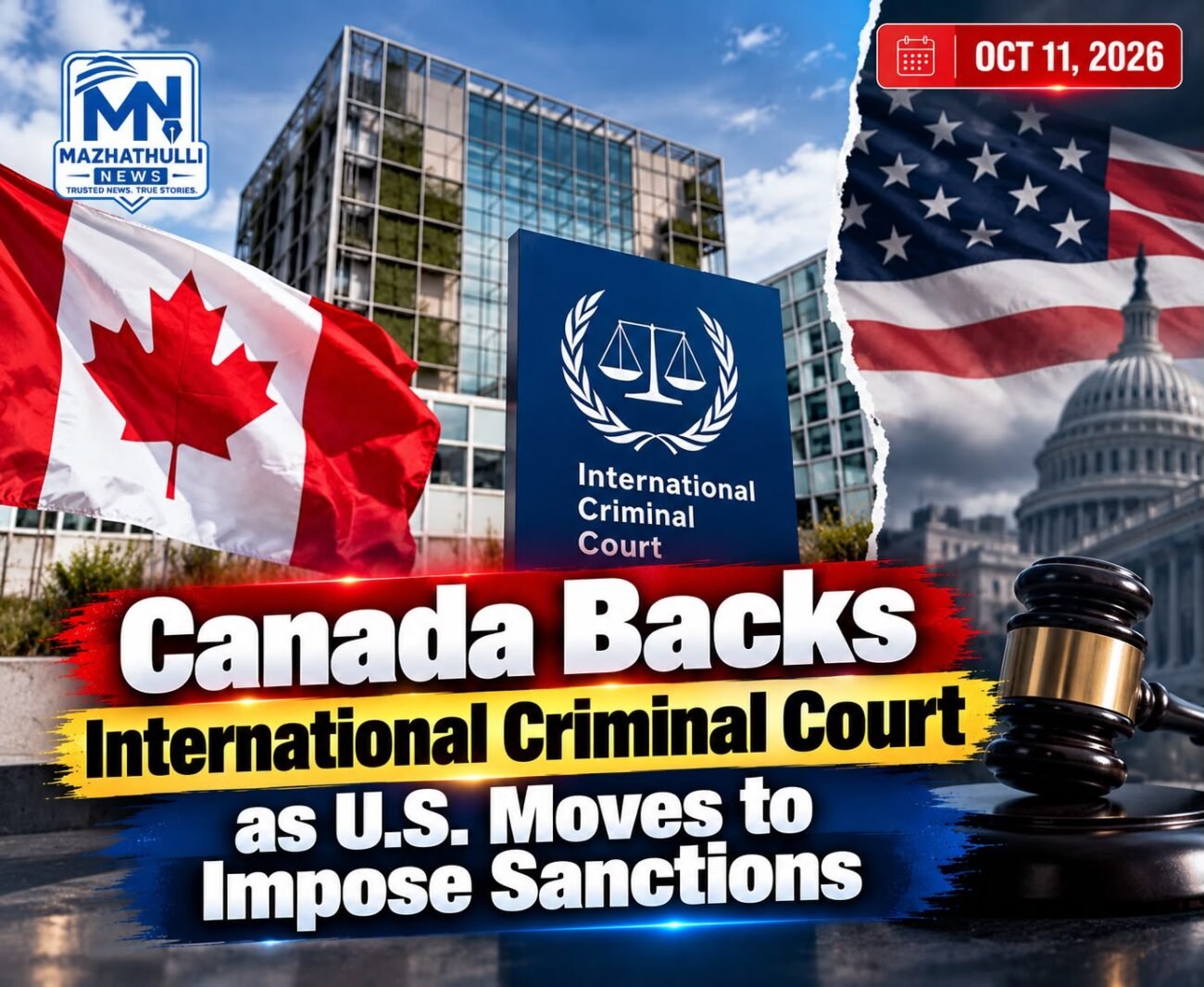
Canada Backs International Criminal Court as U.S. Moves to Impose Sanctions
Canada has reaffirmed its support for the International Criminal Court (ICC), joining seven countries in opposing the United States’ decision to impose sanctions on the international tribunal. The move highlights a growing diplomatic divide between Washington and some of its closest allies over international justice and accountability. On October 9, Canada issued a joint statement alongside Denmark, Germany, France, Italy, Japan, the Netherlands and the United Kingdom, expressing strong disagreement with the U.S. sanctions. The countries reaffirmed their commitment to the ICC’s independence, impartiality and integrity, stressing that the court plays an important role in holding individuals accountable for serious international crimes. The statement warned that the sanctions could significantly affect the court’s operations, its employees and their families. The eight countries said they would continue working together to support the ICC, uphold the rules-based international system and advance accountability for serious crimes. The announcement followed the Trump administration’s decision to impose sweeping sanctions on the ICC. U.S. Secretary of State Marco Rubio announced the measures on Friday, saying Washington would restrict transactions with the court and cut off its access to U.S.-based financial services, technology companies and the U.S. dollar. American individuals and businesses that maintain certain commercial relationships with the institution have been given six months to wind down those activities. The Trump administration has long opposed the ICC’s investigations involving the United States and its allies, particularly Israel. Washington argues that the court should not exercise jurisdiction over American nationals or officials from countries that are not parties to the Rome Statute, the treaty that established the tribunal.
The dispute has intensified over the ICC’s actions involving Israeli leaders, including arrest warrants issued for Israeli Prime Minister Benjamin Netanyahu and former defence minister Yoav Gallant over alleged crimes connected to the war in Gaza. The court has also faced U.S. opposition over its investigation into alleged crimes involving American personnel in Afghanistan. The ICC maintains that it operates independently under international law and has jurisdiction in situations where the legal requirements of the Rome Statute are met. The court strongly condemned the latest U.S. measures, describing them as an attempt to obstruct justice and undermine the international legal order. Its leadership has vowed to continue investigations and prosecutions despite the sanctions. For Canada, the decision to join the joint statement reflects its continued commitment to the international court and the system of accountability established after the Second World War. Canada is a party to the Rome Statute and has supported efforts to investigate and prosecute genocide, crimes against humanity, war crimes and the crime of aggression within the court’s legal mandate.
The ICC was established in 2002 and is based in The Hague, Netherlands. It is designed to prosecute individuals accused of some of the world’s most serious crimes when national authorities are unable or unwilling genuinely to investigate and prosecute them. The court currently has 125 member states, although several major powers, including the United States, Russia and China, are not parties to the Rome Statute. The U.S. sanctions could create practical challenges for the court because many international financial transactions, digital services and technology systems rely on American companies or infrastructure. The measures could complicate payments, access to services and cooperation with organisations that fear exposure to U.S. penalties. The Netherlands, which hosts the court, has been exploring ways to protect the ICC and its personnel from the effects of the sanctions. European officials have discussed possible legal measures to shield European companies and employees from pressure to comply with the U.S. restrictions. Other countries have also called for coordinated international action to preserve the court’s ability to function. The diplomatic dispute comes as the United States urges its allies to support its position. Rubio warned that Washington would continue efforts to dismantle the ICC if other countries did not align themselves with the American approach. Canada and the other signatories, however, said they remained committed to supporting the institution and engaging in dialogue with countries that are not members. The disagreement presents a challenge for relations between Canada and the United States, which cooperate closely on trade, defence and security. While the two countries remain important partners, their differing positions on the ICC demonstrate that they do not always share the same approach to international institutions and legal accountability. The Canadian government’s statement also sends a broader message about the importance of protecting independent judicial institutions from political pressure. Whether the sanctions significantly disrupt the ICC’s work will depend partly on how financial institutions, technology providers and member states respond in the coming months. With the court’s investigations continuing and diplomatic discussions expected to intensify, Canada and its partners face the task of supporting international accountability while managing the consequences of a dispute with one of their closest allies.