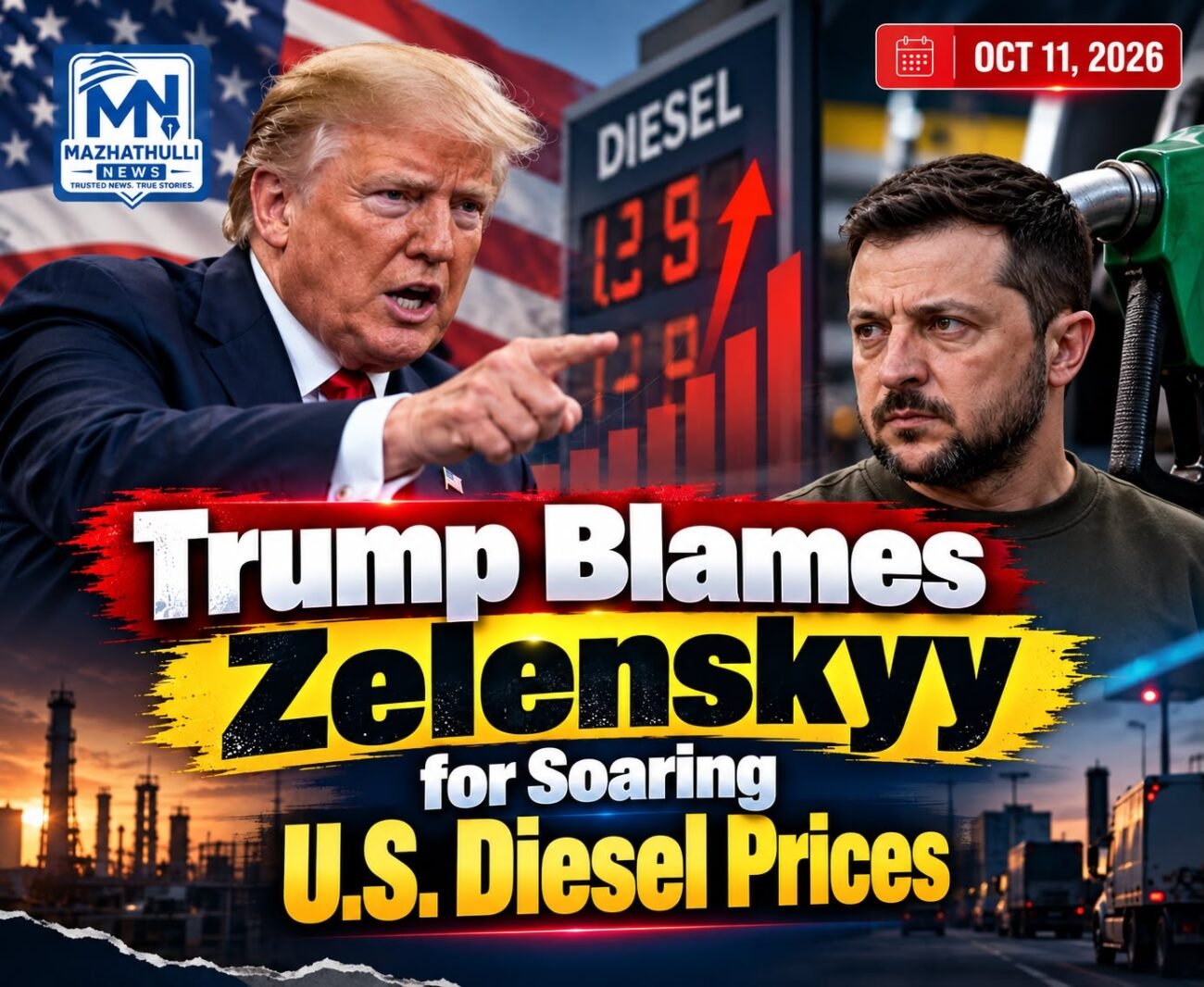
Trump Blames Zelenskyy for Soaring U.S. Diesel Prices
U.S. President Donald Trump has blamed Ukrainian President Volodymyr Zelenskyy for rising diesel prices in the United States, arguing that Ukraine’s attacks on Russian energy infrastructure are worsening global fuel shortages. Trump also called for Ukraine to elect a new president, claiming Zelenskyy has failed to secure a peace agreement with Russia. The remarks came amid growing tensions over Washington’s decision to arrange diesel supplies from Moscow. Speaking to reporters on Saturday, October 10, Trump said Ukraine needed a leader willing to negotiate an end to the war. “I suggest they get a new leader who can make a deal because he could have made many deals and for some reason he never does,” Trump said. He also accused Zelenskyy of creating difficulties for American farmers and ranchers by continuing attacks on Russian fuel infrastructure. Trump’s comments followed an announcement on Friday that Russia would supply diesel to the United States and global markets under an agreement reached with Russian President Vladimir Putin. Trump said Russia would immediately provide more than 300,000 metric tonnes of diesel, followed by additional shipments in November and subsequent months. His administration also temporarily eased sanctions affecting Russian fuel exports as part of the effort to increase supplies and bring prices down. The announcement represents a significant policy shift because Western sanctions have been designed to restrict Russian energy revenues following Moscow’s full-scale invasion of Ukraine in February 2022. Trump has argued that increasing fuel supplies could help ease pressure on American consumers, businesses and agricultural producers ahead of the November 3 midterm elections. Diesel prices have surged in the United States amid disruptions to global energy markets. The war involving the United States, Israel and Iran, which began on February 28, has contributed to higher oil prices and difficulties moving energy supplies through the Middle East. The conflict in Ukraine has also affected global fuel production and refining capacity, adding to uncertainty in international markets. Trump has repeatedly urged Zelenskyy to stop targeting Russian oil refineries and other energy facilities. He argues that such strikes reduce the availability of refined petroleum products and contribute to higher prices worldwide. Energy analysts say attacks on Russian refineries can tighten global diesel supplies, but they also point to the wider impact of Middle Eastern conflict, shipping disruptions and the interconnected nature of international fuel markets. The available evidence does not support attributing the entire increase in U.S. diesel prices to Ukraine alone.
Zelenskyy sharply criticised the diesel agreement, warning that allowing Russia to earn more from petroleum exports would help finance its war against Ukraine. He described the decision as a benefit to Putin and argued that easing restrictions without reciprocal steps to reduce attacks would undermine efforts to end the conflict. The Ukrainian president said additional Russian energy revenues could be used to purchase weapons components, improve drones and missiles, and sustain military operations. He has maintained that meaningful progress toward peace requires pressure on Moscow to stop its invasion and agree to a lasting settlement. European governments have also expressed concern about Washington’s decision. Several U.S. allies said they remained committed to sanctions against Russia, arguing that energy revenues continue to support Moscow’s military campaign. The agreement has raised questions about coordination between Washington, Kyiv and European capitals as diplomatic efforts to end the war continue. The diesel arrangement was announced while U.S. representatives, including special envoy Steve Witkoff and Jared Kushner, were meeting Ukrainian officials and European diplomats in Miami to discuss proposals for ending the conflict. A senior Ukrainian official told The Associated Press that Kyiv had not been informed of the agreement before Trump announced it. Trump also criticised Zelenskyy’s record during the war, claiming Ukraine had lost substantially more territory than independent estimates indicate. Current estimates put Russian control at approximately 20 per cent of Ukrainian territory, rather than the 30 per cent cited by Trump. The president further made claims about casualties that are difficult to verify, as reliable and comprehensive figures for military deaths on both sides remain unavailable. The call for new Ukrainian leadership also raises questions about elections during wartime. Ukraine has not held a presidential election since the full-scale invasion began, with martial law and continuing security threats complicating the process. Ukrainian officials have argued that organising a nationwide vote would be difficult while soldiers are deployed at the front, millions of people are displaced and Russian attacks continue.
For the United States, the dispute comes at a politically sensitive time as high fuel costs place pressure on households and businesses. Diesel is essential to trucking, agriculture, construction and freight transportation, meaning sustained price increases can affect the cost of food and other consumer goods. The latest market data indicate that the U.S. average diesel price reached approximately $6.28 per gallon on October 9, although prices vary by region. Trump’s remarks have further exposed differences between Washington and Kyiv over how to end the war and how much economic pressure should be maintained on Russia. While the U.S. president has prioritised securing additional fuel supplies and reaching a negotiated settlement, Zelenskyy and several European leaders argue that easing sanctions without concrete steps toward peace risks strengthening Moscow’s ability to continue fighting. The developments leave the future of U.S.-Ukraine relations uncertain as diplomatic negotiations continue. The immediate questions are whether the Russian diesel shipments will materially reduce fuel prices, how the temporary easing of sanctions will affect Russia’s war finances, and whether the disagreement will complicate international efforts to secure a lasting ceasefire.