Poilievre Urges Alberta to Stay in Canada as Separation Referendum Approaches
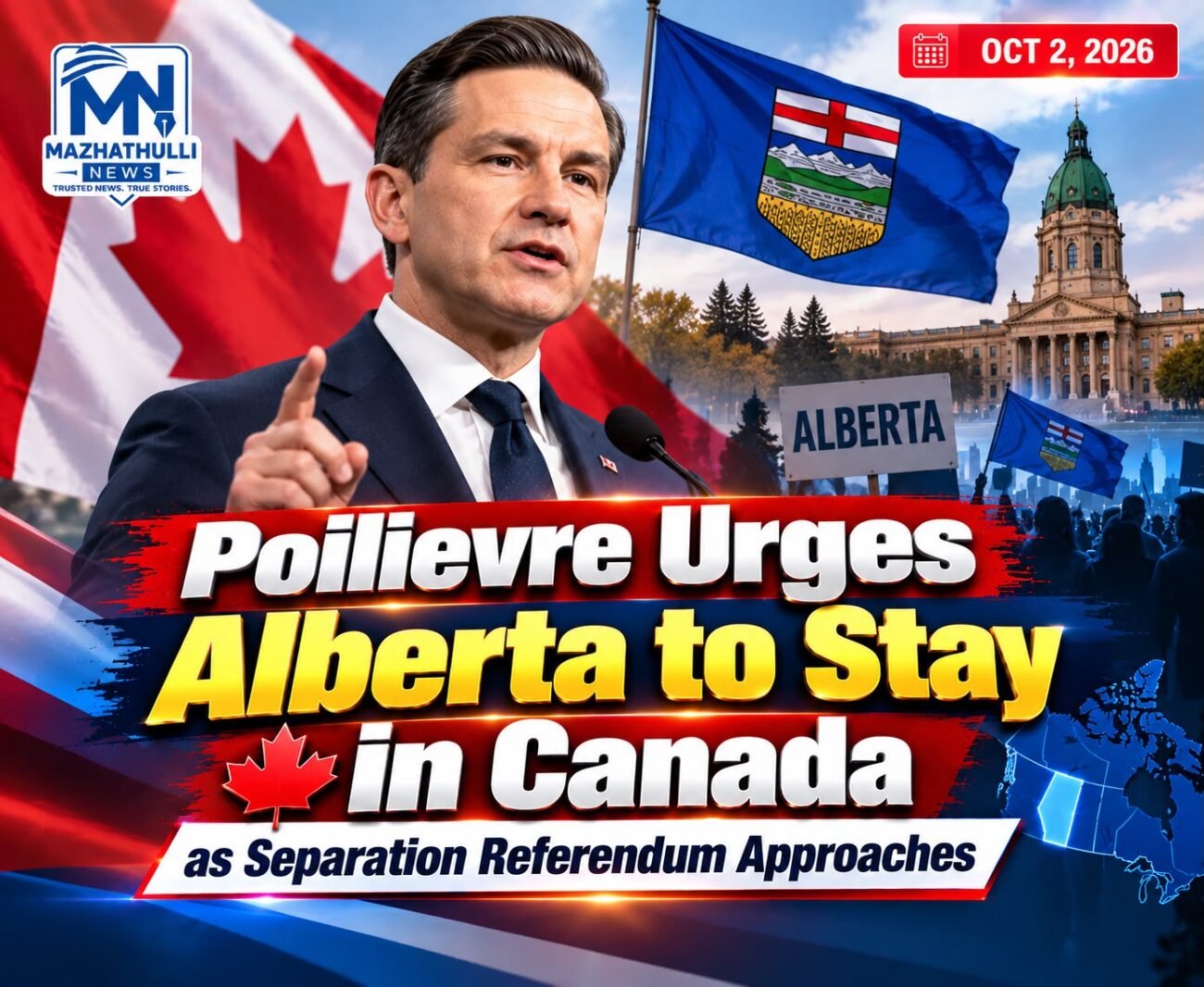
Federal Conservative Leader Pierre Poilievre has urged Albertans to remain part of Canada, arguing that separation would not resolve the province’s economic and political frustrations. His comments came during a speech in Edmonton on September 29, as Alberta prepares for a provincial referendum scheduled for October 19, 2026. Speaking at a downtown Edmonton hotel, Poilievre sought to persuade Albertans, particularly Conservative supporters, that the province could achieve its goals while remaining within the Canadian federation. He acknowledged that many residents are frustrated with federal government policies but argued that their concerns should be addressed through political and policy changes rather than independence. Poilievre said the dissatisfaction among separatists was primarily directed at the federal Liberal government rather than Canada itself. He criticised what he described as excessive federal interference in provincial matters and argued that Ottawa had failed to address important issues affecting Alberta, including energy development, affordability and economic opportunities. “Separation will not solve those problems. Becoming even more Canadian will,” Poilievre told supporters, outlining his position on the province’s future. He argued that Albertans should continue pressing the federal government to remove barriers to resource development and allow the province’s oil and gas industry to reach its full potential.
The Conservative leader also highlighted the economic pressures facing Canadians, including the cost of groceries, fuel and housing. He said federal policies had contributed to difficulties for businesses and workers, particularly in Alberta’s energy sector, where uncertainty surrounding regulations and resource development has remained a major political issue. The October 19 referendum, called by Premier Danielle Smith’s United Conservative Party government, contains 10 questions covering a range of provincial and constitutional issues. The final question asks voters whether Alberta should remain part of Canada or whether the provincial government should begin the process of holding a second, binding referendum on separation. Smith has publicly stated that she supports Alberta remaining in Canada and intends to vote accordingly. She has said the referendum is intended to give Albertans an opportunity to express their views after significant numbers of people signed petitions both supporting and opposing separation. Poilievre’s Edmonton appearance was part of a wider effort by federal Conservatives to campaign for national unity. He has appointed Alberta Conservative MP Dane Lloyd to lead the Conservatives for Canada initiative, which aims to encourage Albertans to remain within Confederation. Lloyd has also been involved in organising events and bringing together Conservative politicians who oppose separation. The separation debate has become increasingly prominent in Alberta, driven by long-standing disagreements with Ottawa over energy regulations, environmental policies, taxation, provincial jurisdiction and the distribution of federal powers. Supporters of independence argue that Alberta should have greater control over its resources, revenues and political decisions. Those opposed have raised questions about the financial, economic and constitutional uncertainties that could follow separation. A major issue in the debate is Alberta’s relationship with the rest of Canada. The province has a highly integrated economy, with businesses depending on interprovincial trade, transportation networks and access to national and international markets. Any move towards independence would raise complex questions involving currency, federal debt, pensions, borders, Indigenous rights, citizenship and existing agreements with other provinces.
Poilievre has argued that Alberta should use its influence within Canada to push for changes rather than leave the federation. His position is that stronger provincial autonomy and different federal policies could address many of the concerns driving the separatist movement.
With the October 19 vote approaching, the debate is expected to remain a major political issue across Alberta. The referendum will give voters an opportunity to express their views on several questions, including the province’s future relationship with Canada. The outcome of the final question could determine whether the government proceeds towards another vote specifically on separation. Poilievre’s intervention adds another significant voice to the national discussion about Alberta’s future, highlighting the competing views on provincial autonomy, economic independence and national unity.